Exterior Envelope Engineering
Architectural Stringing
Affixing light strings directly to roof shingles or gutter lips with plastic holiday clips is an invitation to structural failure. When icicles accumulate, a 20-meter run of decorative wiring can rapidly shoulder over 40 kilograms of ice weight. Without tension relief, wires snap, gutters deform, and short circuits occur.
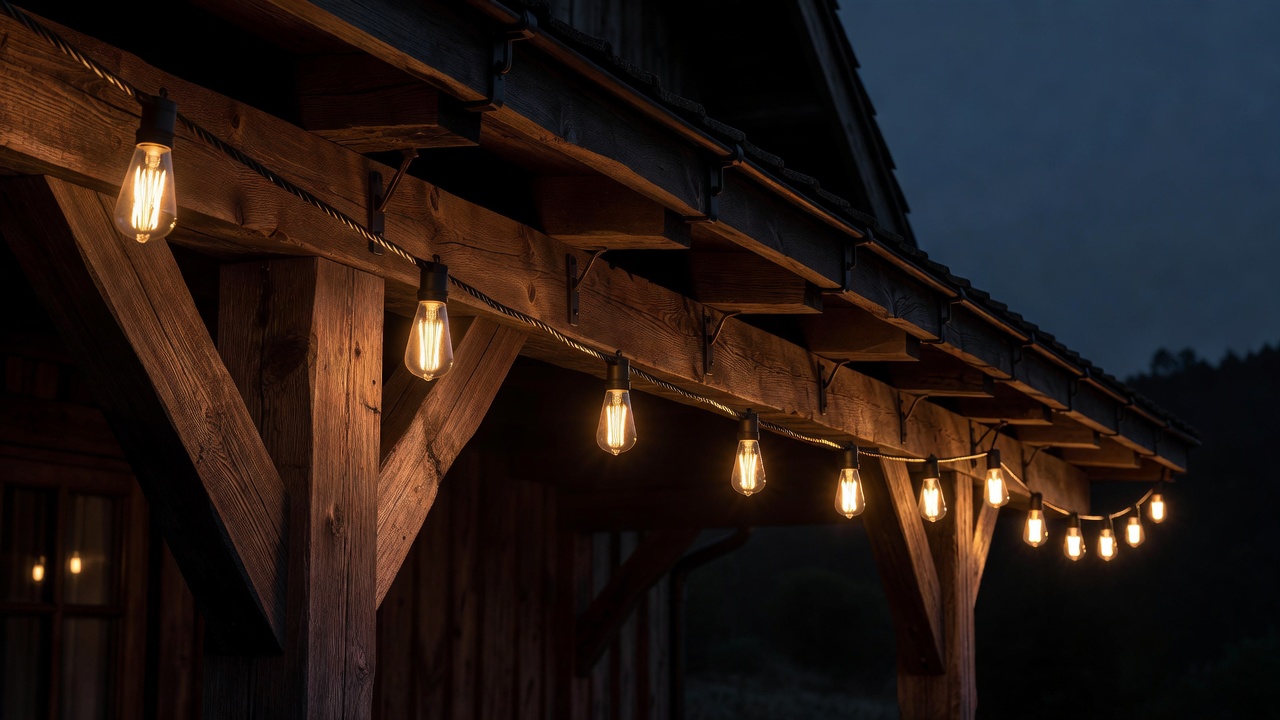
The Catenary Wire Standard
Commercial lighting designers never permit electrical cable to bear mechanical tension. Instead, a dedicated 316 marine-grade stainless steel catenary cable (typically 2.5mm or 3.2mm in diameter) is tensioned between structural anchor eye-bolts using a turnbuckle system.
The decorative illumination harness is then secured to the steel catenary wire every 30 centimeters using UV-stabilized, subzero nylon cable ties or rubberized wire clasps. In the event of catastrophic ice loading, the steel cable absorbs all mechanical stress, protecting the electrical conductors and sockets from stretching or snapping.
Socket Orientation and Water Management
Edison-style festoons (E27 or E14 sockets) must be installed with the bulb hanging strictly downward. When installed horizontally or inverted, wind-driven snow melts and pools around the contact threads, causing corrosion or RCD tripping. Each socket should feature a tight rubber sealing collar that seats snugly against the glass neck of the bulb.
| Mounting Substrate | Recommended Anchor Hardware | Cold Weather Precaution |
|---|---|---|
| Solid Timber Fascia | Stainless steel screw eye (min 8mm shank) | Pre-drill to prevent grain splitting in frozen wood |
| Solid Brick / Stone | Heavy-duty drop-in shield anchor with eye-bolt | Avoid mortar joints; anchor into center of cured brick |
| Standing Seam Metal Roof | Non-penetrating mechanical seam clamps | Torque check clamps after first subzero temperature cycle |
Circuit Protection and Splitter Placement
All exterior facade lighting must originate from an outdoor socket protected by a high-sensitivity 30mA Residual Current Device (RCD). Locate multi-way splitters under the protection of roof eaves or inside silicone-gasketed IP66 enclosures. Never leave female plug ends resting on flat roof decks or gutter troughs where melting snow creates temporary dams.