Interior Sill Luminance
Window Displays
In Nordic and alpine architectural traditions, the window sill serves as a luminous threshold between the secure comfort of the hearth and the biting frost outdoors. A thoughtful sill arrangement not only illuminates the living space with warm, indirect amber light, but casts an inviting beacon across the snowbound landscape outside.
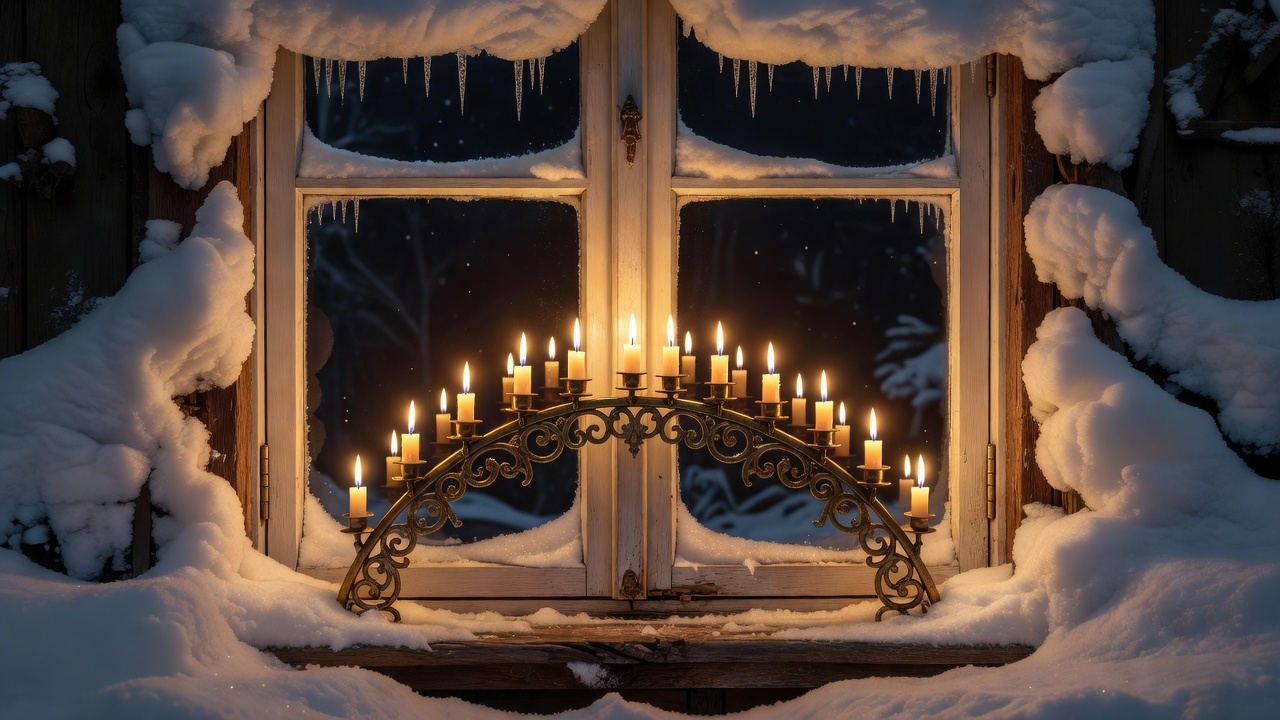
The Geometry of the Candle Arch
Originating in the Ore Mountains of Germany and popularized throughout Scandinavia, the triangular candelabra (Schwibbogen) symbolizes miners returning from deep, sunless shafts to illuminated homes. Structurally, the triangular form naturally complements the vertical proportions of sash and casement windows.
When placing a multi-point candle bridge on a wooden sill, specify tiered heights so the central flame or bulb sits at the exact midpoint of the window pane. This ensures optimal outward visibility from street level, creating a clean architectural silhouette framed by the window mullions.
Mitigating Glass Reflections & Double Glazing Glare
Modern double- and triple-glazed Low-E windows can create distracting ghost reflections if luminaries are positioned incorrectly. When the light source is bare and placed too far back inside the room, light bounces between the pane coatings, scattering into messy secondary flares.
To preserve crisp outward silhouettes, place fixtures within 5 to 10 centimeters of the interior glass surface. Use matte paper, pierced brass, or sandblasted glass shades that diffuse the source toward the room while allowing clean, unscattered light to project directly outward through the pane.
Automated Dimming and Timer Cycles
Indoor window displays should operate on an automated twilight-to-midnight cycle. Running luminaries past midnight in quiet residential settings wastes power and disrupts natural circadian rhythm. Modern plug-in smart dimmers set to ramp down luminosity gradually over 30 minutes after 23:00 offer an elegant, hands-free routine.